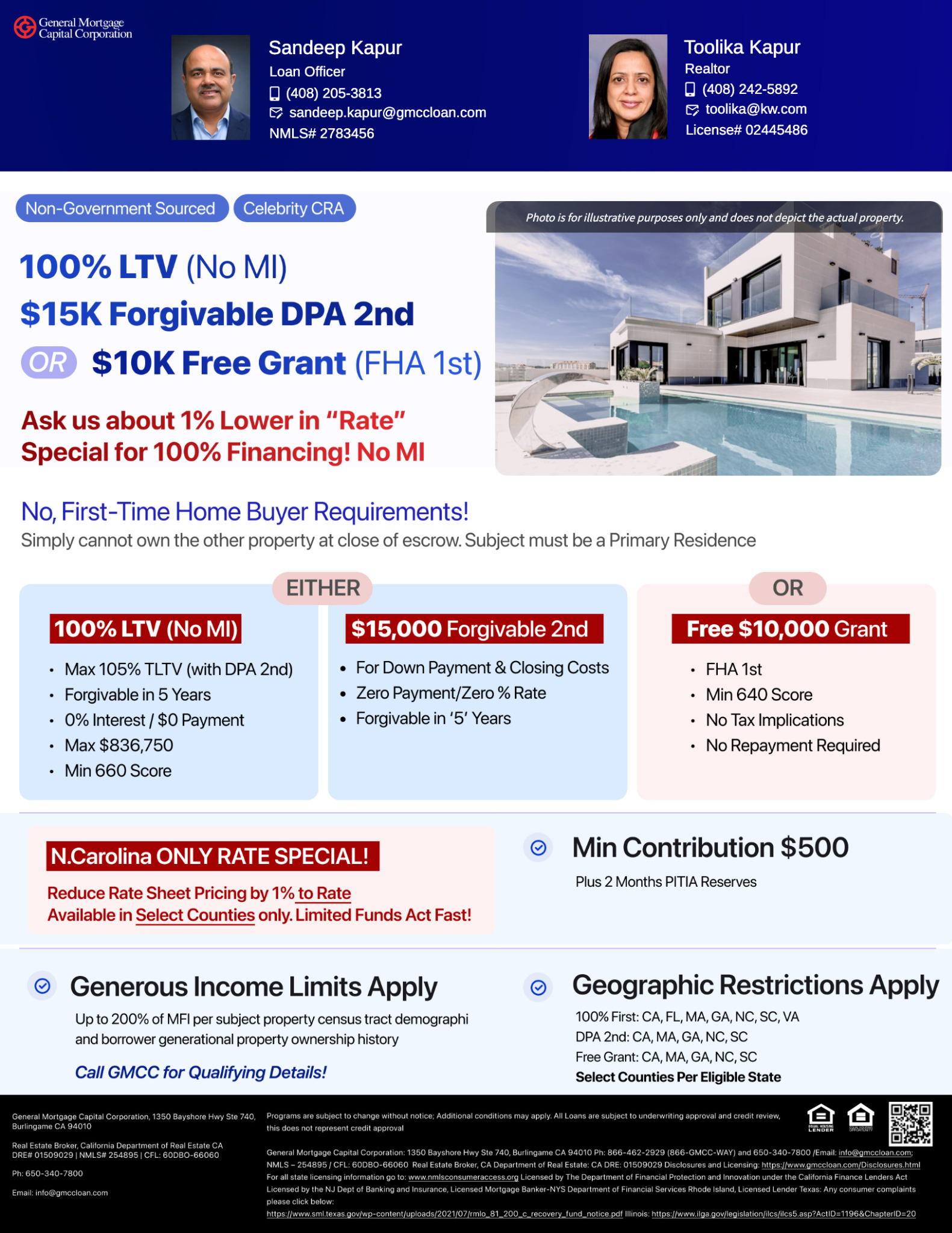
Down-payment assistance can reduce the amount an eligible buyer must bring to closing. Depending on the program, assistance may come through a grant or a subordinate loan with its own forgiveness, repayment, occupancy, income, property, and geographic requirements.
Who may want to explore it
Buyers who have stable income but limited cash for closing
Households preserving reserves for repairs and moving costs
Eligible primary-residence buyers who meet program limits
Buyers comparing assistance with a larger conventional down payment
How qualification generally works
The first mortgage and assistance program are reviewed together because each can affect qualification and total monthly cost.
Eligibility may depend on income, census tract, property location, credit, occupancy, and ownership history.
Some assistance is forgivable; other options may require repayment or impose conditions when the home is sold or refinanced.
San Jose & Santa Clara perspective
What to consider in a high-cost Bay Area market
Confirm that the assistance amount works with the price range you are targeting in San Jose or Santa Clara County.
Budget for closing costs, prepaid taxes and insurance, inspections, and reserves that assistance may not cover.
Ask for a side-by-side comparison of interest rate, payment, cash to close, and long-term cost.
Questions to ask before applying
Is the assistance a grant, forgivable loan, or repayable second mortgage?
What income, location, and occupancy limits apply?
Are there homebuyer education or minimum-contribution requirements?
Program availability, rates, terms, loan limits, and eligibility requirements are subject to change without notice. All loans are subject to credit, income or asset, and property approval as applicable. This information is educational and is not a commitment to lend. Consult appropriate tax, legal, or financial professionals for advice specific to your situation.