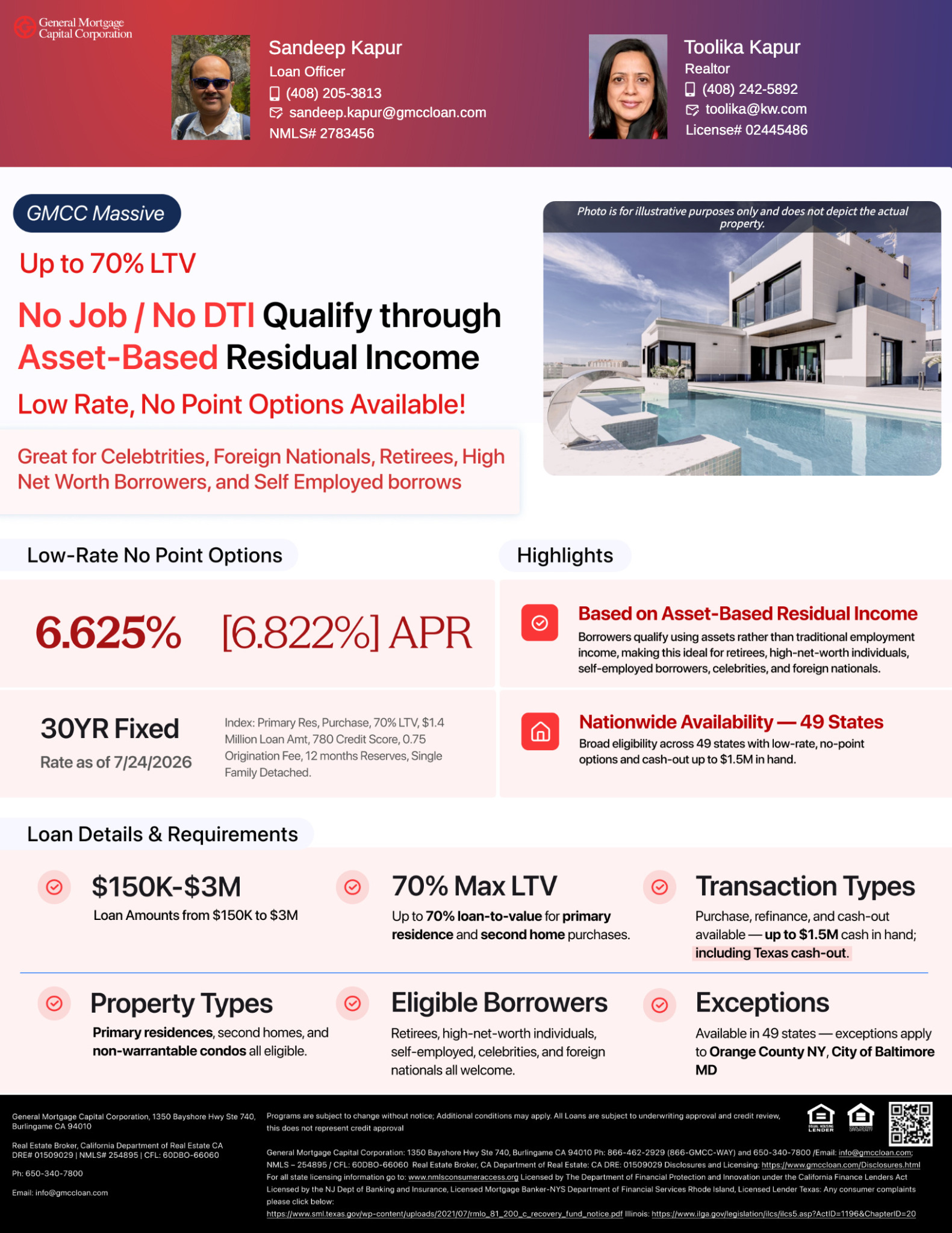
An asset-based mortgage uses eligible assets to support a calculated residual-income amount instead of relying only on current employment income. It may fit borrowers with a strong balance sheet whose taxable or monthly income does not tell the full story.
Who may want to explore it
Retired borrowers with investments and limited earned income
Self-employed borrowers with substantial liquid assets
High-net-worth buyers, investors, and eligible foreign nationals
Borrowers considering a primary residence, second home, or eligible condominium
How qualification generally works
The lender identifies eligible assets, applies program valuation rules, and determines the income those assets can support.
The review also considers credit, loan-to-value, reserves, property type, occupancy, and transaction purpose.
Purchase, rate-and-term refinance, and cash-out availability depends on current guidelines and the complete file.
San Jose & Santa Clara perspective
What to consider in a high-cost Bay Area market
Retain enough accessible liquidity for property taxes, insurance, maintenance, and unexpected costs after closing.
Coordinate with your tax or financial adviser before changing an investment strategy to qualify for a mortgage.
Ask for a comparison with bank-statement, conventional, jumbo, and other asset-based options.
Questions to ask before applying
Which accounts and asset types can be used?
Are assets depleted, pledged, or simply documented?
How are age, reserves, and remaining assets considered?
What property and cash-out limitations apply to my scenario?
Program availability, rates, terms, loan limits, and eligibility requirements are subject to change without notice. All loans are subject to credit, income or asset, and property approval as applicable. This information is educational and is not a commitment to lend. Consult appropriate tax, legal, or financial professionals for advice specific to your situation.